Interstellar probeOperational since 1977
Voyager 1
The most distant human-made object: a 1970s spacecraft that completed the first Grand Tour of the giant planets and became the first to reach interstellar space.
- Mission status
- Active interstellar mission
- Launch
- 5 September 1977 · Cape Canaveral
- Heliopause crossing
- 25 August 2012 · about 121 AU
- Planetary encounters
- Jupiter and Saturn only
- Power
- Three radioisotope thermoelectric generators
- Communications
- NASA Deep Space Network · radio
- Special cargo
- The Golden Record
- Distance today
- About 172 AU, updated below
Where Voyager 1 is now
Distance, speed and direction come from NASA/JPL Horizons. The numbers advance while this page is open.
Loading current UTC time
NASA/JPL reference state
Sun-centered ecliptic J2000 vector
How this position is calculated
NASA/JPL Horizons supplies a geometric state vector in a Sun-centered ecliptic J2000 frame. A fresh vector is requested when the page opens; between requests the browser propagates it with the reported velocity.
One trajectory, two giant worlds
Voyager 1 launched after its twin but took the faster route. It passed Jupiter in March 1979, revealing Io’s volcanoes, then encountered Saturn in November 1980. A close pass by Titan bent its path north and out of the planetary plane, ending its tour of the outer planets.
That choice traded Uranus and Neptune for the first close-up view of Titan, a moon with a thick atmosphere. It also sent Voyager 1 toward the heliopause sooner than Voyager 2.
- Launch from Cape Canaveral and departure into an Earth-escape trajectory.
- Closest approach to Jupiter, including the discovery of active volcanism on Io.
- Saturn encounter and a close pass by Titan that redirected the spacecraft out of the ecliptic.
- The Family Portrait and Pale Blue Dot, the final image sequence commanded from Earth.
- Crosses the heliopause and enters the local interstellar medium.
Real images from the mission
NASA/JPL-Caltech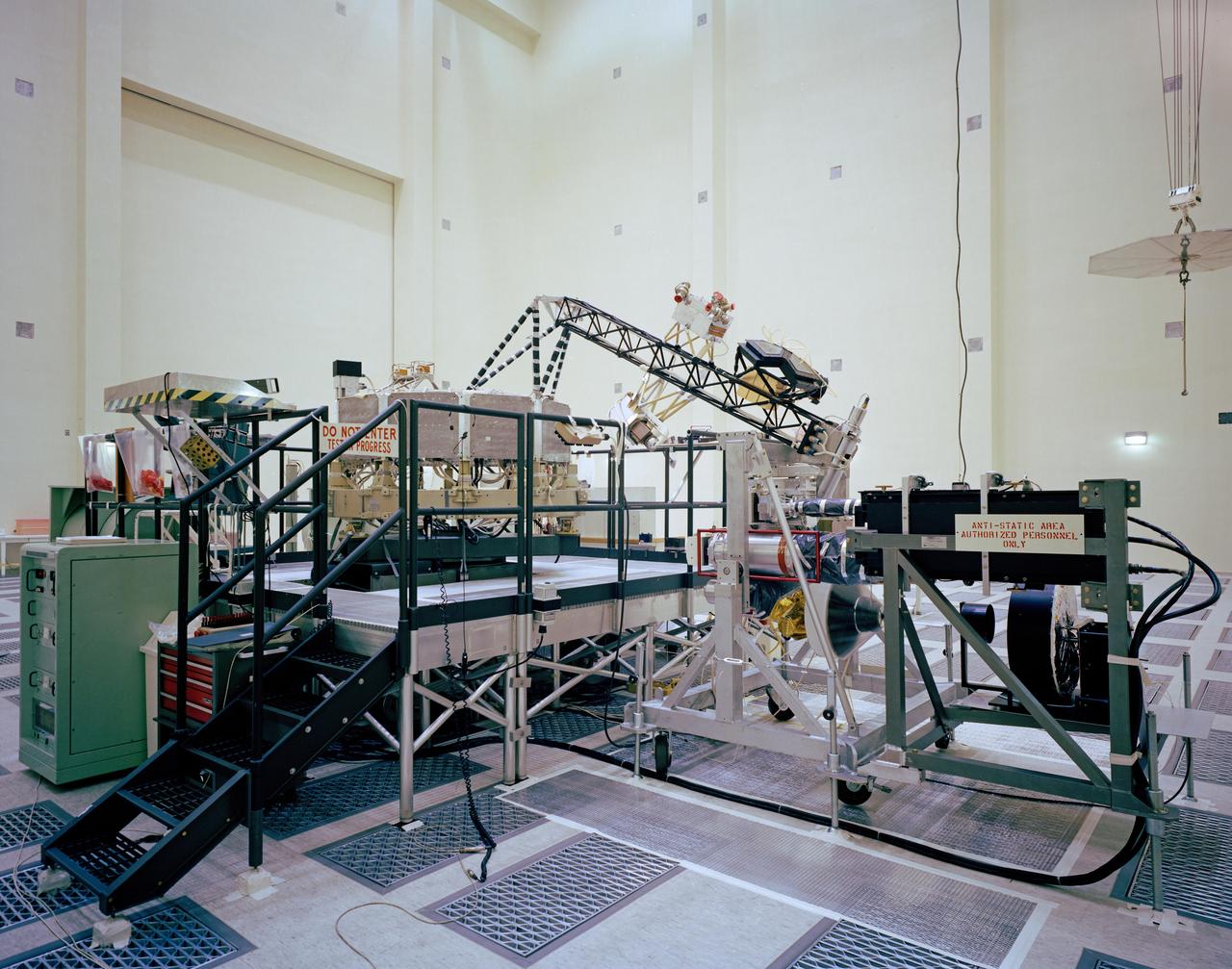

What interstellar space is teaching us
Beyond the heliopause, Voyager 1 measures the plasma, magnetic field and energetic particles of the local interstellar medium. Repeated plasma-wave events give the electron density, while the magnetometer records how the interstellar magnetic field is distorted near the heliosphere.
The mission has helped show that the boundary is neither a smooth wall nor the edge of the Sun’s gravity. Voyager 1 is still inside a region influenced by the Sun and remains bound to it, while moving through material that originated beyond the heliosphere.
A spacecraft in a race against time
Every year the radioisotope generators produce less power. Heaters and instruments have been prioritised and switched off as the power budget shrinks, while the team balances science with keeping the spacecraft warm and controllable.
The decay of plutonium-238 reduces generator output every year. Turning off an instrument or heater saves power immediately, but the choice may be irreversible.
Radio travels at light speed. A command reaches Voyager 1 after nearly a day, and confirmation takes almost another day to return.
Its computers have far less memory than a modern watch. Engineers maintain custom software, simulators and operating knowledge built around the original design.
The fading signal is detected by enormous dish antennas and processed at extremely low bit rates. Deep Space Network time must be shared across many missions.
How NASA still controls Voyager 1
- PlanMission engineers choose a safe power, thermal and science configuration.
- EncodeCommands are assembled for the spacecraft’s original computers and cross-checked in simulators.
- TransmitA Deep Space Network antenna sends a powerful uplink toward Voyager’s known position.
- VerifyTelemetry returns hours later and confirms the command or triggers a recovery plan.
The antennas that keep listening
NASA/JPL-Caltech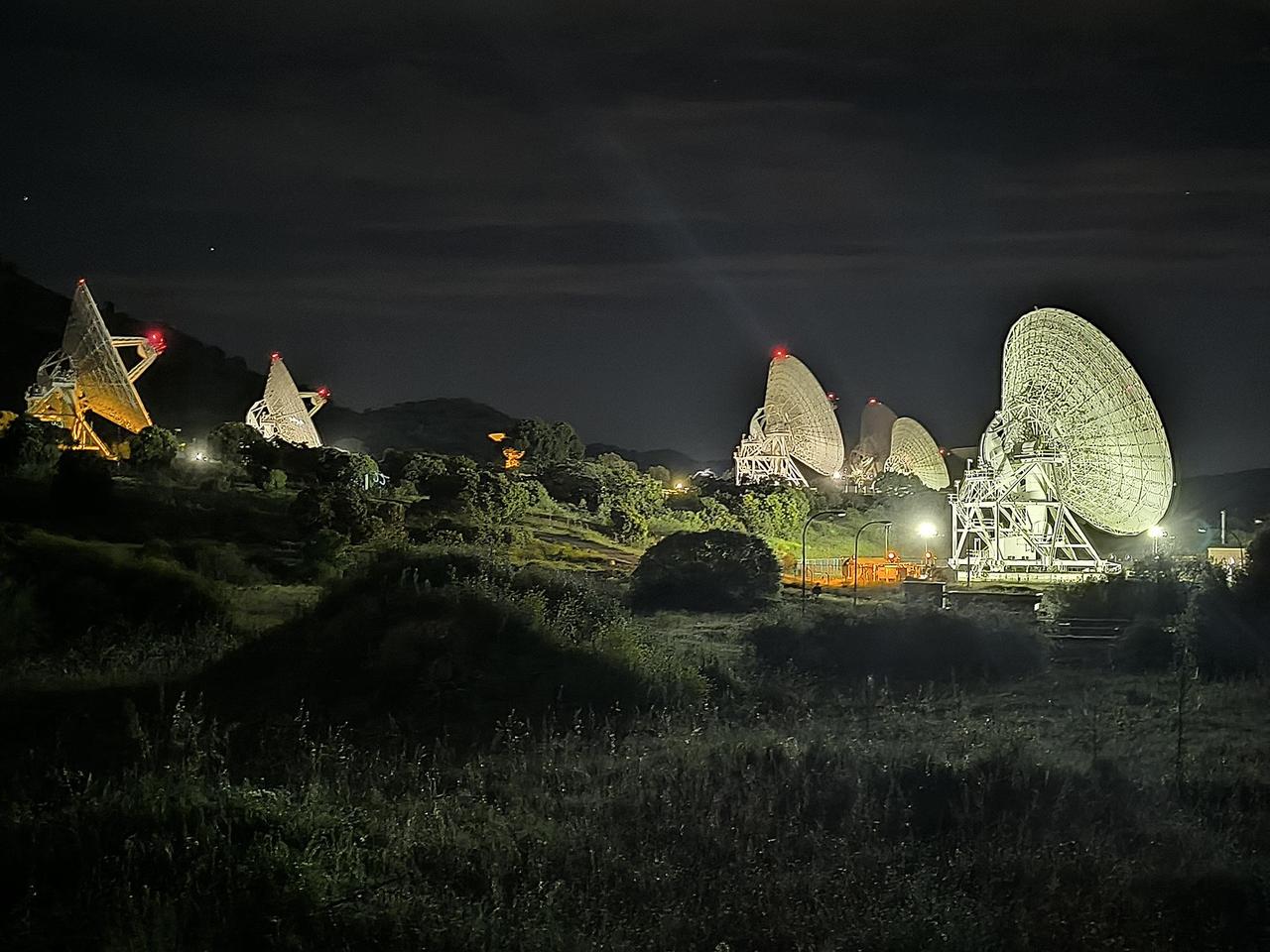
Selected mission publications
| Year | Paper | Journal | Link |
|---|---|---|---|
| 2024 | Voyager 1 Electron Densities in the Very Local Interstellar Medium to beyond 160 au | Astrophysical Journal Letters | DOI |
| 2019 | Compressible and Incompressible Magnetic Turbulence Observed in the Very Local Interstellar Medium by Voyager 1 | Astrophysical Journal | DOI |
| 2014 | Interstellar Magnetic Fields Observed by Voyager 1 beyond the Heliopause | Astrophysical Journal Letters | DOI |
Worth knowing
Voyager 1 is farther away than any other human-made object.
Its radio signal is billions of times weaker by the time it reaches Earth.
It carries a gold-plated record containing sounds, music and images of Earth.
Watch the mission
-
Voyager 1 Trajectory through the Solar SystemNASA
-
Fixing Voyager: Restoring Communications Across the Solar SystemNASA Jet Propulsion Laboratory
-
Voyager Captures Sounds of Interstellar SpaceNASA Jet Propulsion Laboratory
Videos are embedded from YouTube and load only when a card is opened.
Follow the twin mission
Voyager 2
Visit all four giant planets and follow the second path into interstellar space.
Interactive viewFind it on the Solar System map
Return to the animated outer-system map with Voyager 1 selected.
The crossingThe heliopause
Understand the moving pressure boundary Voyager 1 crossed in 2012.
Sources: NASA Voyager mission · NASA mission status · NASA/JPL Horizons API · NASA image and video archives.