Interstellar probeOperational since 1977
Voyager 2
The only spacecraft to visit Uranus and Neptune: a planetary grand tour that became a second, independent expedition through the heliopause.
- Mission status
- Active interstellar mission
- Launch
- 20 August 1977 · Cape Canaveral
- Heliopause crossing
- 5 November 2018 · about 119 AU
- Planetary encounters
- Jupiter, Saturn, Uranus and Neptune
- Power
- Three radioisotope thermoelectric generators
- Communications
- NASA Deep Space Network · radio
- Special cargo
- The Golden Record
- Distance today
- About 144 AU, updated below
Where Voyager 2 is now
Distance, speed and direction come from NASA/JPL Horizons. The numbers advance while this page is open.
Loading current UTC time
NASA/JPL reference state
Sun-centered ecliptic J2000 vector
How this position is calculated
NASA/JPL Horizons supplies a geometric state vector in a Sun-centered ecliptic J2000 frame. A fresh vector is requested when the page opens; between requests the browser propagates it with the reported velocity.
The complete Grand Tour
Voyager 2 launched first but took a slower trajectory that kept the outer-planet alignment open. After Jupiter and Saturn, it continued to Uranus in 1986 and Neptune in 1989. No other spacecraft has returned close-up images of either ice giant system.
The Neptune encounter sent Voyager 2 south of the ecliptic. Its different route made the 2018 heliopause crossing a crucial second measurement, in a different hemisphere and under different interstellar conditions.
- Launch from Cape Canaveral on the slower of the two Voyager trajectories.
- Closest approach to Jupiter; the tour continues toward Saturn.
- Saturn encounter preserves the option to reach Uranus and Neptune.
- First and only spacecraft flyby of Uranus, revealing new rings and moons.
- Passes Neptune and Triton, completing the only tour of all four giant planets.
- Crosses the heliopause with a working plasma instrument and enters interstellar space.
Real images from the mission
NASA/JPL-Caltech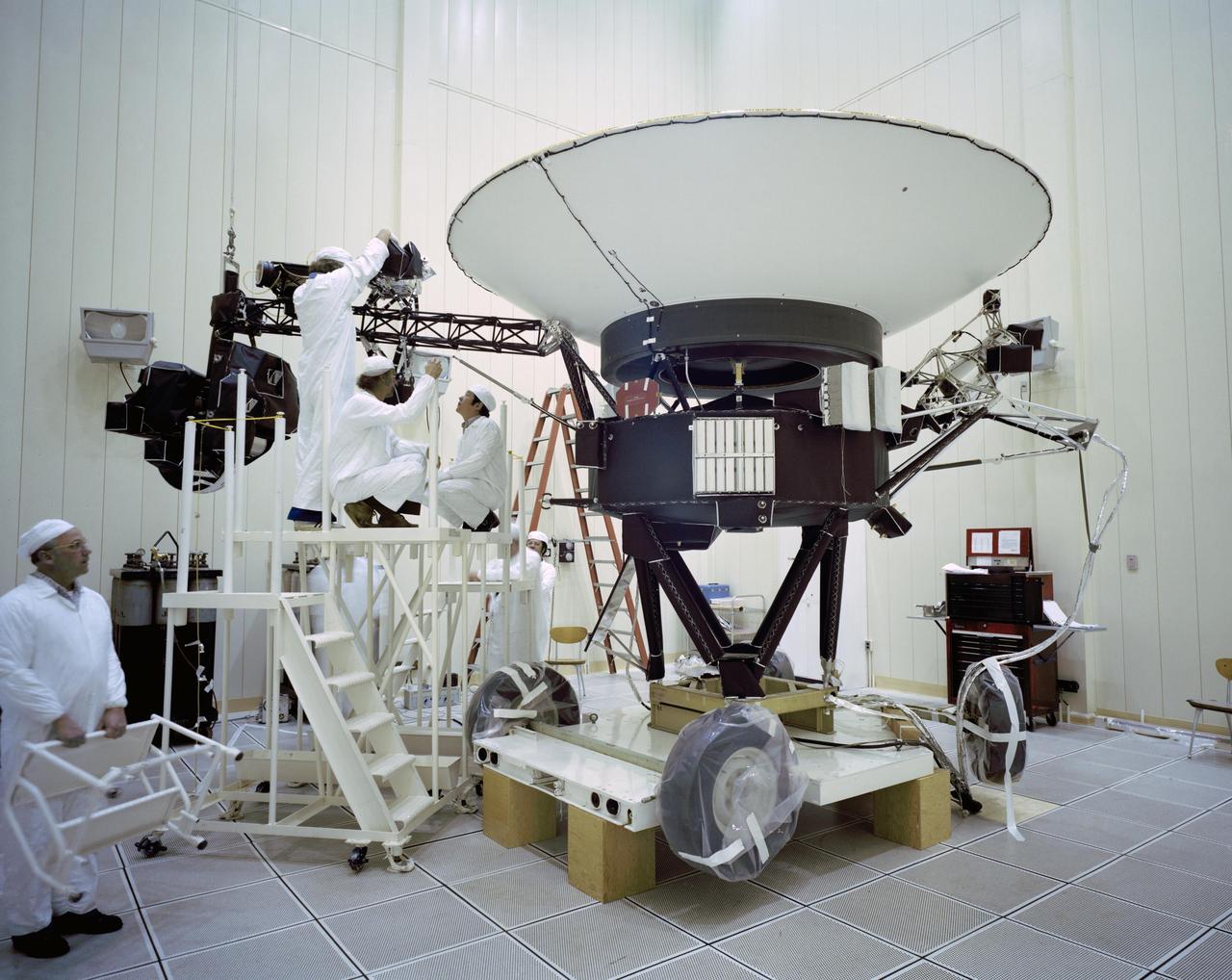


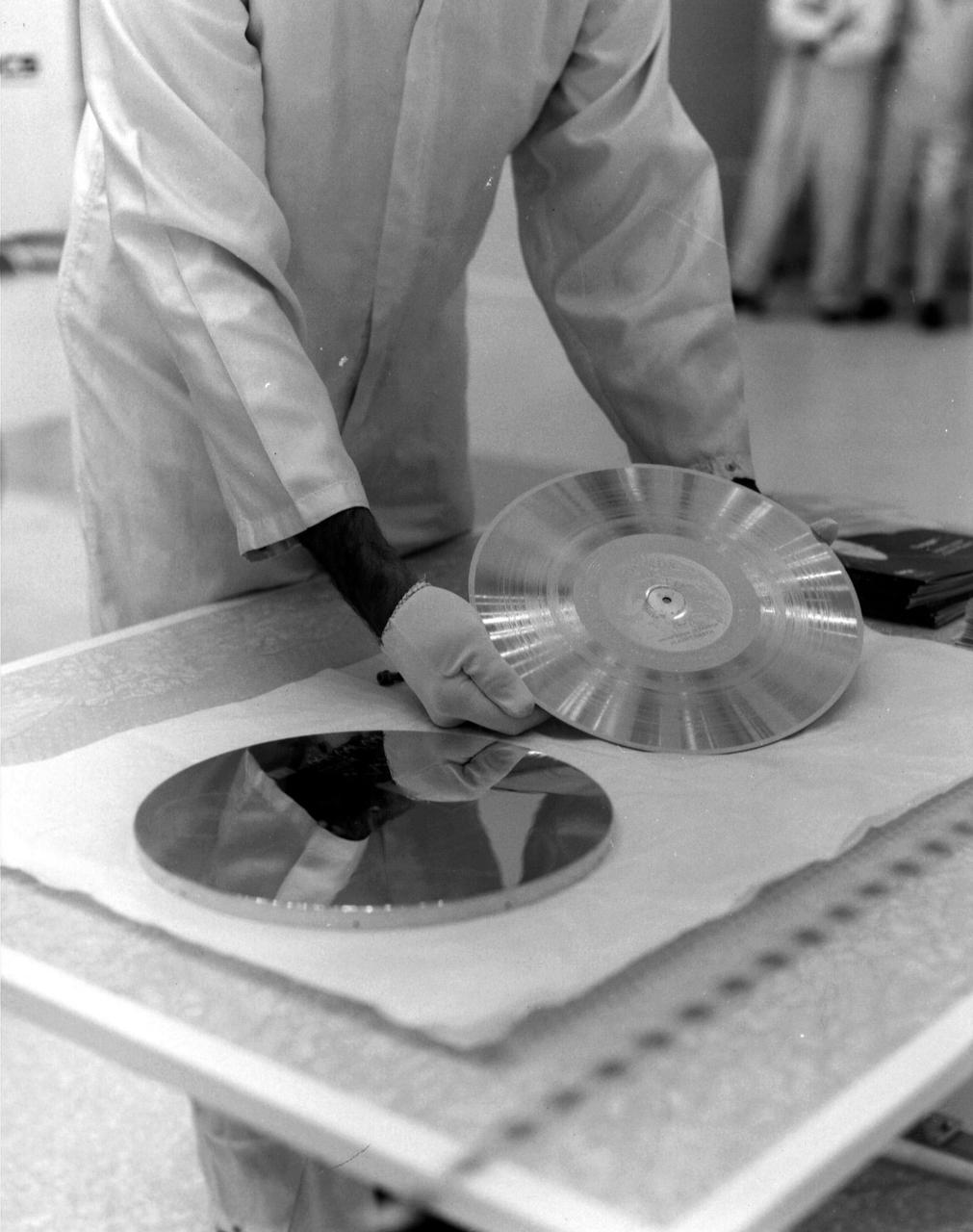
A second laboratory in interstellar space
Voyager 2 crossed the heliopause at a different location and about six years later than Voyager 1. Its plasma instrument supplied a cleaner, more direct measurement of the plasma density and flow beyond the boundary.
The two spacecraft now act as a widely separated pair of sensors in the very local interstellar medium. Their magnetic-field and particle measurements reveal a dynamic, patchy environment shaped by both interstellar conditions and the heliosphere’s motion through space.
Keeping a 1977 spacecraft alive
Voyager 2 has survived harsh radiation at Jupiter, decades of deep cold, and repeated changes in its power and thermal balance. The remaining challenge is preserving the systems that let Earth hear it as the generators slowly fade.
Each radioisotope generator loses output as its heat source decays. NASA manages a shrinking reserve by prioritising heaters and science instruments.
A signal now takes about 20 hours to reach Voyager 2. Engineers cannot troubleshoot in real time, so every command sequence needs extensive simulation.
Thrusters, computers and instruments date from the 1970s. The spacecraft carries fault protection, but recovery relies on careful use of limited power and redundancy.
The signal is extremely faint. NASA’s Deep Space Network must schedule Voyager’s tracking and command sessions alongside many newer missions.
How NASA still controls Voyager 2
- ModelEngineers predict power, temperature and attitude before changing the spacecraft state.
- EncodeNew instructions are written for the original command system and tested in simulated hardware.
- UplinkThe Deep Space Network points a large antenna at the expected position and transmits.
- ConfirmTelemetry returns many hours later; engineers confirm the outcome and preserve margins.
The Deep Space Network
NASA/JPL-Caltech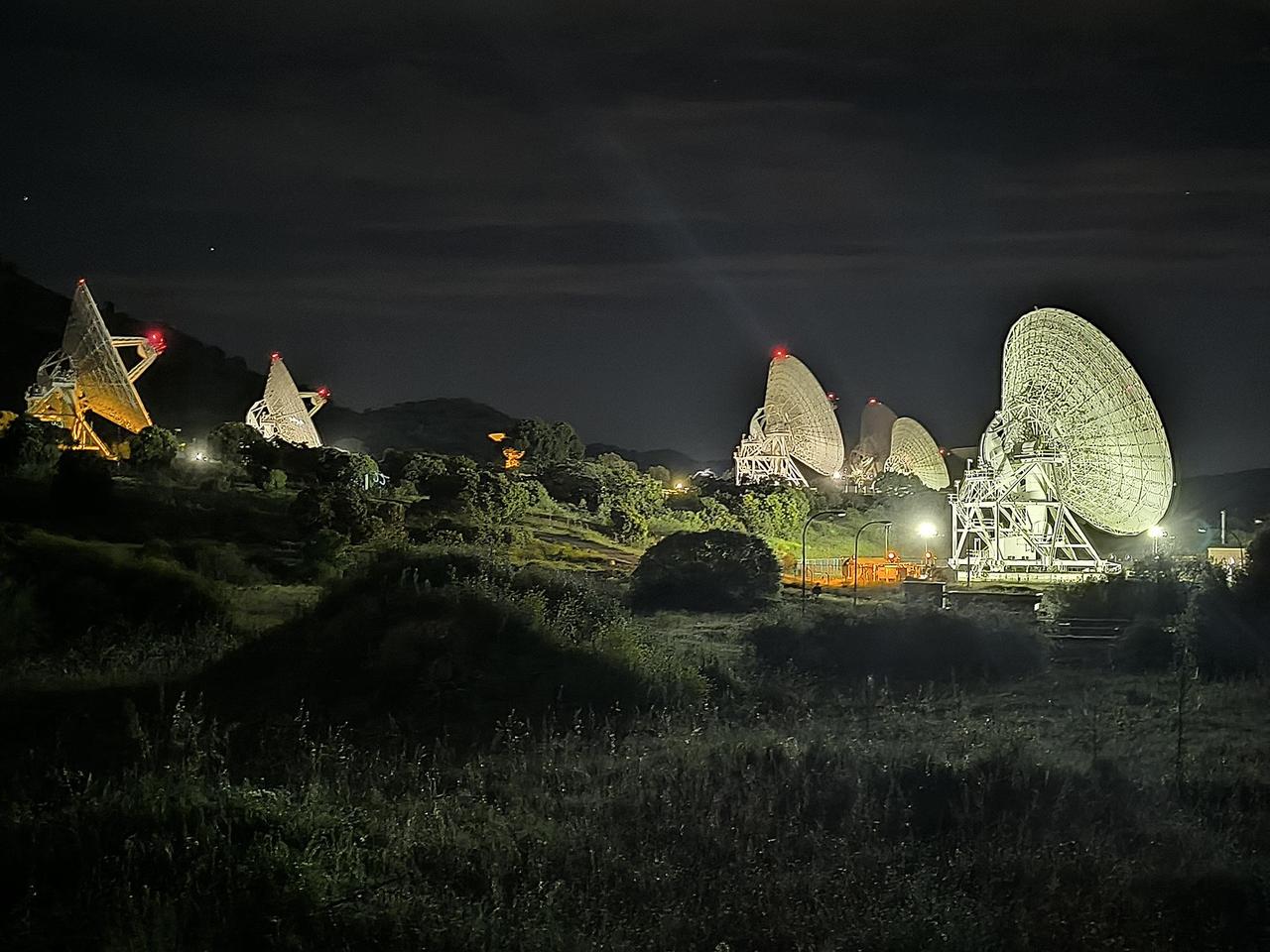
Crossing papers
| Year | Paper | Journal | Link |
|---|---|---|---|
| 2019 | Voyager 2 plasma observations of the heliopause and interstellar medium | Nature Astronomy | DOI |
| 2019 | Cosmic ray measurements from Voyager 2 as it crossed into interstellar space | Nature Astronomy | DOI |
| 2019 | Energetic charged particle measurements from Voyager 2 at the heliopause and beyond | Nature Astronomy | DOI |
Worth knowing
Voyager 2 is the only spacecraft ever to fly past Uranus and Neptune.
Its different exit direction made its heliopause crossing a valuable second measurement.
It launched before Voyager 1, but arrived later at Jupiter.
Watch the mission
-
NASA’s Voyager 2 Enters Interstellar SpaceNASA Jet Propulsion Laboratory
-
Voyager 2: First Spacecraft at NeptuneNASA Jet Propulsion Laboratory
-
JPL and the Space Age: The Footsteps of VoyagerNASA Jet Propulsion Laboratory
Videos are embedded from YouTube and load only when a card is opened.
Follow the twin mission
Voyager 1
Trace the faster route to Saturn, Titan and the first crossing of the heliopause.
Interactive viewFind it on the Solar System map
Return to the animated outer-system map with Voyager 2 selected.
The crossingThe heliopause
See how two spacecraft measured the same boundary in different places.
Sources: NASA Voyager mission · NASA mission status · NASA/JPL Horizons API · NASA image and video archives.